
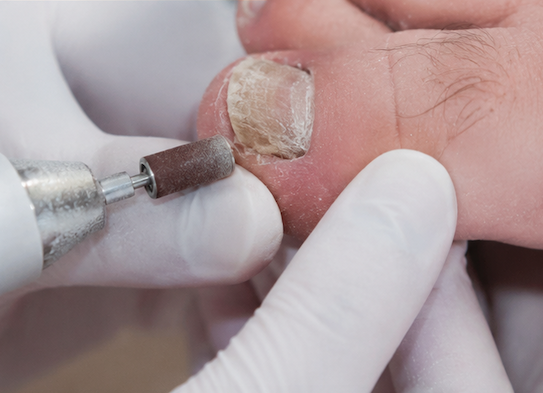
Nail fungus (onychomycosis) is a fungal infection that often progresses slowly. The earlier it is addressed, the simpler treatment usually is. Waiting several months makes recovery of a healthy nail harder.
1. Recognise common signs
The most frequent signs are yellowish or whitish discoloration, a nail that thickens, becomes brittle, partially lifts, or shows debris under the nail plate. An unusual odour or involvement of several nails should also raise concern.
Be aware that trauma, psoriasis or simply ageing of the nail can look similar. A clinical examination at the practice helps guide care correctly.
2. Useful daily habits
Keep feet dry, change socks every day and prefer breathable shoes. Dry carefully between the toes after showering. Do not share nail clippers, files or shoes, and disinfect your own tools.
Wear sandals in changing rooms, swimming pools and gyms. If you also have athlete’s foot, treat it at the same time: skin infection can maintain nail infection.
3. Mistakes to avoid
Do not file the nail aggressively “until it disappears” and do not apply random products without assessment. Masking varnishes can hide progression without treating the cause. Cutting a brittle nail too short also increases the risk of injury and secondary infection.
In people with diabetes, any foot or nail lesion should be assessed promptly: the risk of complication is higher.
When to see a medical pedicurist
Book an appointment as soon as the nail’s appearance changes persistently, if pain appears, or if self-care brings no improvement after a few weeks. A medical pedicurist can provide fungal infection treatment: cleaning, controlled reduction of the affected area and hygiene advice to support any prescribed protocol.
In some cases, additional medical referral may be recommended, particularly for systemic antifungal treatment.